Bridge House is a tiny, iconic structure perched across Stock Beck in Ambleside, and often described as one of the most photographed buildings in the area. The house dates from the 17th century and has had many lives: an orchard storehouse, a mill counting house, a workshop, and a modest residence. What makes it special is its scale and its setting—straddling a narrow stone bridge over the beck, with slate-roofed construction that blends into its surroundings. It’s cared for by the National Trust and open to visitors (at certain times), allowing you to imagine how life once might have been in such a compact dwelling. The interior is quite simple, giving a sense of modest domestic life. The immediate area is charming: you can walk along Stock Beck, enjoy the sound of water over rocks, and explore adjacent paths. The contrast between the smallness of the house and the larger natural surroundings gives Bridge House an almost storybook quality. It makes for a quiet stop between hikes, or an atmospheric place to linger and reflect.
The Armitt Museum & Library is a cultural gem tucked in Ambleside. Founded in 1909 by Mary Louisa Armitt, it aims to celebrate the intellectual and artistic heritage of the region. Its collection includes materials related to Beatrix Potter (books, illustrations, natural history watercolours), as well as works and archives from local writers, artists, and naturalists. You’ll find manuscripts, historical photographs, memorabilia, and art connected to Lake District luminaries. The library side reinforces the sense of Ambleside as a place of learning and quiet reflection. Walking through its rooms, you sense the connections between landscape and creativity: how the lakes and fells inspired artistic and literary output. Beyond the permanent collections, the Armitt runs temporary exhibitions, talks, and events, keeping the cultural heartbeat alive. For those who want more than just walking and vistas, it offers a contemplative alternative—a chance to dig into the region’s human stories.
Close to the lakeside, near the head of Windermere, lie the remains of a Roman fort known as Galava (Ambleside Roman Fort). The site dates from the 1st century and was part of the Roman frontier network in Cumbria. While only the foundations and earthworks are visible today, it’s possible to walk among the remaining walls, imagine the layout of barracks, defense structures, and watchtowers, and reflect on how central this area was to Roman administration in this remote region. The location is peaceful, with views across meadows and lake edge, offering a quiet contrast to more crowded tourist spots. It’s open year-round and free to visit, making it a good stop even on a rainy or overcast day. Interpretive boards help place the site in historical context, and the lakeside paths nearby let you combine a gentle walk with a bit of history. For history buffs or those curious about ancient Britain, the Roman fort gives a tangible link to an era when this landscape was very different.
Just a short walk from the town centre, Stock Ghyll Force is a beautiful waterfall where the waters of Stock Beck plunge about 70 ft (around 21 m) through a rocky gorge. The path to the falls winds through woodland, with stepping stones, mossy rock faces, and the constant sound of moving water. The power and grace of the cascade make it especially atmospheric after rain, when flows are stronger. There are viewing platforms and paths above and below, offering different perspectives of the falls. In summer, dappled light through foliage enhances the experience; in autumn and winter, the bare limbs and misty air deepen the drama. Because it’s so accessible, Stock Ghyll Force is a favourite for both casual visitors and walkers who want a refreshing stop. It’s a place to pause, listen, feel cool spray, and soak in the dynamic energy of water moving over stone. For many, it’s a highlight of any visit to Ambleside.
Stagshaw Garden is a charming lakeside garden maintained by the National Trust, located on the southern edge of Waterhead, just a little way from Ambleside’s core. The garden spans about eight acres and features a mix of woodland, rhododendrons, shrubs, and specimen trees. The layout is informal—winding paths, glades, and gentle slopes that allow for hidden surprises: garden rooms, views over the lake, and quiet seats for reflection. In spring and summer, its rhododendrons and azaleas burst into bloom, adding bursts of vibrant colour against evergreen backdrops. Because it sits near the lakeshore, it also serves as a buffer between lake walks and woodland paths. Many walkers pass through the garden on their way to fells or lakeside paths. Because of its manageable size and serene atmosphere, it’s ideal for a gentle stroll, a picnic, or a pause after a longer hike. The garden complements the wild landscapes of the surrounding area by offering a more cultivated, intimate taste of local horticulture and scenery.
Perhaps the most iconic Ambleside walk, Loughrigg Fell is a relatively short but rewarding climb. At 335 m, it gives panoramic views over Windermere, Rydal Water, Grasmere, and the surrounding valleys. The ascent can be made directly from Ambleside, or via Loughrigg Terrace overlooking Rydal Water. It’s a circular walk if you return through woodland paths. Despite being modest in height, the views are wide and dramatic.
Just minutes from Ambleside centre, this short woodland walk leads to the striking 70-foot Stock Ghyll waterfall. The path winds gently through trees, with viewing platforms giving different perspectives of the cascading waters. It’s perfect for a leisurely outing or for families who want an accessible taste of Lakeland nature without a full hike.
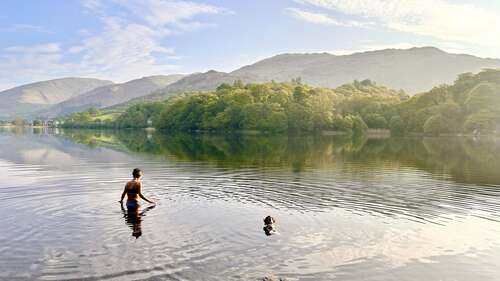
This is a classic linear walk linking Ambleside with the village of Grasmere. It takes you past Rydal Hall and Rydal Mount (once home to William Wordsworth), then along the scenic shores of Rydal Water and Grasmere. The route combines lakeside paths, woodland tracks, and gentle climbs, with plenty of spots to pause. You can return the same way or take a bus back.
For serious walkers, the Fairfield Horseshoe is one of the Lake District’s great ridge walks. Beginning in Ambleside, the route ascends via Nab Scar and Heron Pike, looping around to the summit of Fairfield (873 m), then returning along Hart Crag, Dove Crag, High Pike, and Low Pike. It’s about 10 miles long and takes most of the day, but rewards with sweeping fell-top panoramas and a true mountain experience.
This moderate climb starts in Ambleside and heads up to Wansfell Pike, giving commanding views over Windermere and towards the higher fells. The walk can be done as a short up-and-down hike, or extended as a circuit, descending to Troutbeck and returning via Skelghyll Woods. It’s a good balance of effort and reward.
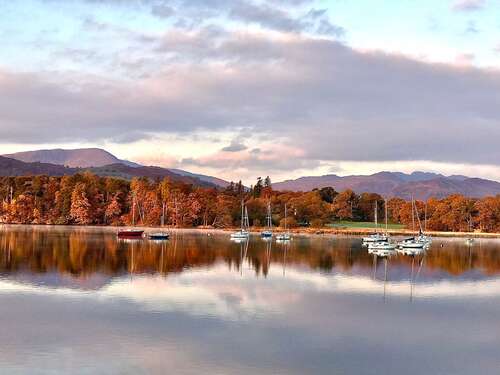
A gentler stroll for those who prefer level ground. From Ambleside, a short walk leads to Waterhead at the northern tip of Windermere. Here you can enjoy lakeside views, watch the boats, or connect with longer trails along the shore. It’s ideal for a relaxed evening walk or to combine with a lake cruise.